Who owned Goodmanham in 1086? Explore the village’s fascinating entries in the Domesday Book, discover its four principal landholders and learn how land ownership and wealth changed in the years following the Norman Conquest.
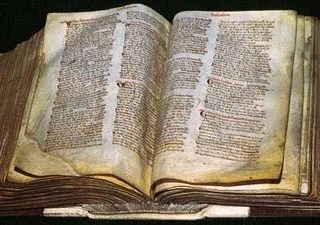

Who owned Goodmanham in 1086? Explore the village’s fascinating entries in the Domesday Book, discover its four principal landholders and learn how land ownership and wealth changed in the years following the Norman Conquest.
The great survey undertaken by order of William I was completed in 1086.
The survey’s main purpose was to record the annual value of every piece of landed property to its Lord, and the resources in land, labour force, and livestock from which the value derived, allowing the King to ensure the correct amount of tax due was paid. It also recorded the annual value of land and names of tenants in the reign of Edward the Confessor, in 1066, prior to the Norman Conquest.
Henry II’s Treasurer Richard Fitzneal writing in 1179 states “the natives call this book Domesday… that is, the Day of judgement…we call this book the “book of judgements”, not because it contains decisions…but because from it, as from the Last Judgement, there is no further appeal.”
The Book is divided into counties, with each county’s listing opening with the kings demesne (land for his own use). Under the feudal system, the king was the only “true owner” of land, he was the ultimate overlord. Holdings of bishops followed, then religious houses, then lay tenants-in-chief, and lastly the king’s serjeants (servients) and thegns.
Goodmanham is listed in the Domesday Book, along with 15 other place names within the Hundred of Weighton – (Hundreds were the main administrative subdivisions of a county).
There are 4 land holders listed in the Domesday Book for Goodmanham: King William, the Archbishop of York, Robert of Mortain and William of Percy.

“In Wigstun (the Weighton Hundred) with the berewick (a farm or grange) Eptun (Shiptonthorpe) there are 30 carucates (an area of land representing the amount of land a team of eight oxen could plough in a single season) to be taxed in which there may be 30 ploughs. Morcar held there for 1 manor, The King has now there 1 plough and 8 villeins (a serf or peasant tied the lords manor, providing labour in exchange for land to cultivate) with 4 ploughs and 5 bordars (smallholders). Meadow 1 league long by a half broad. The whole 4 long and 3 broad. Value in the time of King Edward (the Confessor) £30; now 60 shillings (£3).”
Further land is held by William at Houghton, Cliffe and Goodmanham.

“In Evringham (Everingham) with its berewicks Londenesburg (Londseborough), Toletorp (Towlthorpe) and Gudmunham (Goodmanham) are 17 carucates to be taxed, and there may be 10 ploughs. Eldred the Archbishop held these for one manor. Now 2 Clerks and 1 Knight hold this under Thomas the Archbishop, having among themselves 3 ploughs and 22 villeins having 6 ploughs and 2 mills, Meadow 10 acres, The whole manor 1 league long and a half broad. Value at the time of King Edward £14: now £6”

“In Gudmundham (Goodmanham) Colgri and Orm had two manors of 5 carucates and 6 carucates to be taxed and there may be 3 ploughs, Nigel (Fossard) now has of the Earl in demesne 1 plough and 2 villiens with 1 plough and 1 vassal paying 32 pence ( a £ being 240 pence). Value at the time of King Edward £4; now 12 shillings (20 shillings to the £)”

“ In Est Reding (the East Riding), Wigstun (Weighton) Hundred.
Manor in Gudmunham (Goodmanham) Norman had 2 carucates of land to be taxed and there may be 1 plough there. William de Colevil has of William de Perci himself 2 ploughs there. Value at the time of King Edward 20 shillings: now 10 shillings.”
Domesday Book folio images by permission of Professor John Palmer, George Slater and opendomesday.org.
Free online copy of Domesday Book
More details of:
https://www.domesdaybook.net/home